School Anxiety in Children and Teens: Signs by Age and What Actually Helps
Back to school can bring excitement, fresh starts and new opportunities.
But for many children and teenagers, it also brings something else:
Anxiety.
Sometimes it is obvious.
“I don't want to go to school.”
“I can't do this.”
“My tummy hurts.”
Sometimes it is far harder to spot.
A child becomes increasingly irritable.
A previously confident teenager disappears into their bedroom.
Your child is apparently “fine” at school but collapses the moment they get home.
Homework becomes a battleground.
Friendships suddenly feel overwhelming.
They start worrying incessantly about getting things wrong.
Or school mornings simply become harder and harder until one day they cannot get through the door.
The important thing to understand is that school anxiety does not look the same in every child.
It also changes as children grow.
What overwhelms a five-year-old entering school for the first time may look very different from the pressures affecting a 14-year-old navigating puberty, friendships, social media and academic expectations.
So rather than asking only:
“How do I stop my child being anxious?”
we need to become more curious.
What is my child finding difficult?
What does their behaviour tell us about what they need?
And perhaps most importantly:
What can we change to make school feel safer and more manageable?
SCHOOL STRUGGLES? START HERE! >> GUIDE, TRACKER AND ACTION PLAN
What does school anxiety look like?
Anxiety is a normal human emotion.
Feeling nervous before the first day of school, a test, a performance or an unfamiliar experience does not automatically mean a child has an anxiety disorder.
Some stress can even be useful. It alerts us, prepares us and helps us respond to challenges.
The problem comes when the stress response becomes so frequent or intense that it begins interfering with everyday life.
School anxiety can affect:
Attendance
Learning
Concentration
Sleep
Friendships
Behaviour
Confidence
Eating
Family relationships
Emotional regulation
And because younger children may not yet have the language to say “I am overwhelmed”, anxiety can emerge through their body and behaviour instead.
That is why understanding the signs matters.
Signs of school anxiety in children aged around 5 to 7
For younger children, the transition into school asks an enormous amount of their developing system.
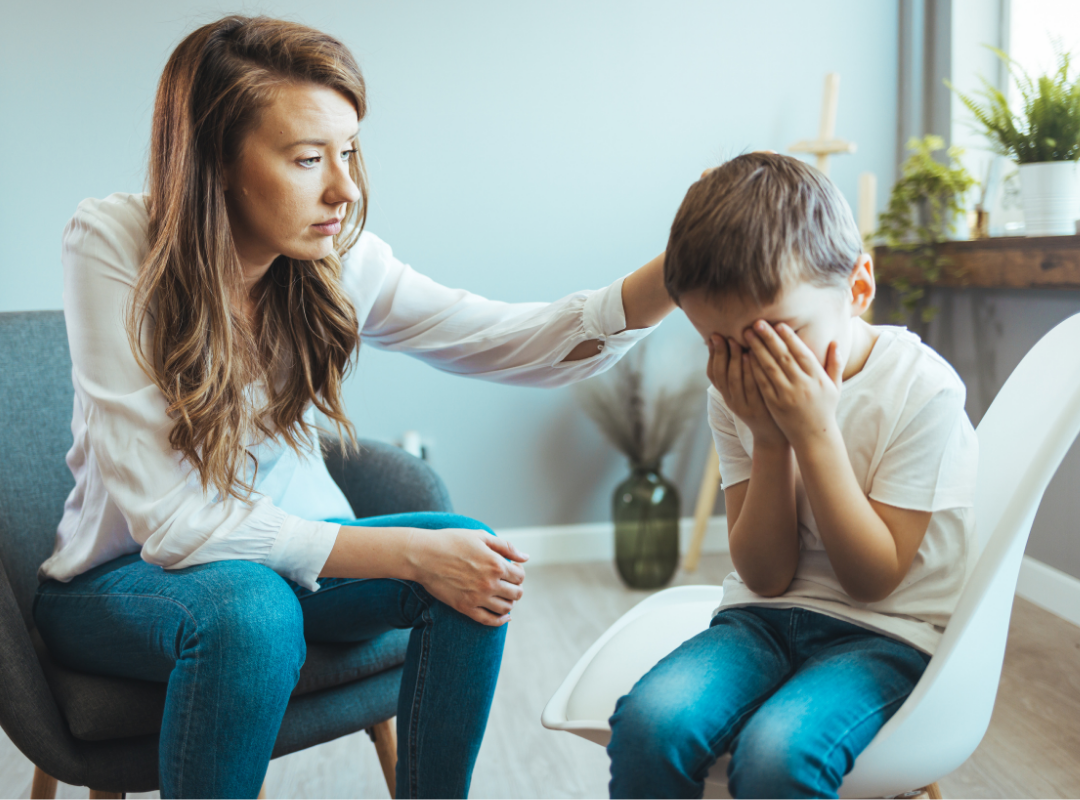
They are expected to separate from their parent, communicate their needs, follow instructions, share, negotiate friendships, regulate big emotions, sit and listen, manage their own belongings and increasingly become independent.
Some children are simply more ready for those demands than others.
Signs that a younger child may be struggling can include:
Heightened separation anxiety
Becoming unusually clingy
Frequent tears before school
Tummy aches or headaches without an obvious physical cause
Big emotional outbursts
Hitting, pushing or impulsive behaviour
Difficulty coping with noise or busy environments
Trouble following classroom instructions
Extreme tiredness after school
Sleep difficulties
Difficulty sharing or playing with peers
Increasing reluctance to attend school
It can be tempting to see these behaviours as a child being difficult.
But a five-year-old rarely has the vocabulary to explain:
“The classroom is too noisy, I'm exhausted, I'm worried about getting things wrong and I don't yet feel secure here.”
Their behaviour may be saying it for them.
School readiness is about more than academics
School readiness is often judged by whether a child knows their letters, numbers and colours.
But being ready to learn involves much more.
Children also need developing:
Communication skills
Self-care skills
Gross and fine motor abilities
Emotional regulation
Social confidence
Attention
Coordination
Independence
Ability to follow instructions
A child may be academically bright but still find the physical, emotional or social demands of the school environment difficult.
When the foundations are under strain, learning becomes harder too.
That is why school struggles deserve a whole child view rather than being reduced to academic ability or behaviour alone.
Signs of school anxiety around ages 7 to 11
As children move through primary school, their difficulties may become less obvious.
They have had several years to learn how school works.
Some become very good at coping.
But expectations are also increasing.

There is more academic work, more comparison with classmates, more complicated friendships and a growing awareness of what they believe they are “good” or “bad” at.
At this stage, school anxiety may look like:
Increasing worry about tests or schoolwork
Perfectionism
Fear of getting things wrong
Needing repeated reassurance
Difficulty concentrating
Avoiding particular subjects
Increasing complaints of feeling ill before school
Emotional outbursts at home
School avoidance
Becoming increasingly negative about their own ability
Friendship difficulties
Withdrawal from activities they previously enjoyed
This is often the point when children begin forming beliefs about themselves.
I'm bad at maths.
I'm stupid.
Nobody likes me.
Everyone else can do this except me.
Those beliefs can become almost as important as the original difficulty.
A child who repeatedly feels unsuccessful may eventually stop wanting to try.
When school anxiety looks like fight, flight, freeze or fawn
Anxiety does not always present as visible fear.
When the nervous system perceives threat or overwhelm, children can respond in different ways.

Fight
This may look like:
Anger, shouting, arguing, pushing back, irritability or explosive behaviour.
Flight
This may look like:
Leaving the classroom, avoiding lessons, repeatedly asking to go home or refusing school altogether.
Freeze
This can be much easier to miss.
The child may appear:
Quiet, disengaged, unresponsive, stubborn, unable to start work or simply “switched off”.
But shutdown is very different from laziness.
Fawn
This response is particularly easy to overlook in school because the child may appear wonderfully compliant.
They may:
Constantly try to please adults
Worry about being in trouble
Seek repeated reassurance
Avoid disagreement
Try to keep everybody else happy
Become highly perfectionistic
Because these children are rarely disruptive, their anxiety can go unnoticed.
The behaviour looks easy to manage.
The child underneath it may be anything but relaxed.
“They're fine at school but fall apart at home”
This is something many parents hear.
The teacher says:
“We don't see any of this at school.”
And yet your child comes through the front door and explodes.
They cry.
They shout.
They retreat to their room.
They cannot cope with another demand.
Sometimes they seem like a completely different child.
That does not necessarily mean either the parent or teacher is wrong.
Both may be seeing something real.
Some children use extraordinary amounts of energy to keep themselves regulated during the school day.
They follow the rules.
They concentrate.
They manage friendships.
They suppress their worry.
They keep going.
And then they get home.
The place where they feel safest is often the place where everything they have been holding together finally comes out.
This after-school collapse can be important information.
Instead of focusing only on the meltdown, ask what may have depleted the child before it happened.
SCHOOL STRUGGLES? START HERE! >> TRACKER AND ACTION PLAN FOR £9.99
Why belonging matters so much at school
Children learn best when they feel safe enough to learn.
That includes feeling that:
I belong here.
People know me.
I am accepted.
I am allowed to make mistakes.
There are adults here who will help me.
A sense of belonging becomes particularly important during transitions.
Starting school.
Moving class.
Changing schools.
Starting secondary school.
Returning after prolonged absence.
Children often look to us to work out how safe a new situation is.
That means the way adults talk about school matters.
If every conversation at home reinforces the idea that school is awful, teachers are incompetent and tomorrow is likely to be another disaster, an already anxious child receives confirmation that there really is something to fear.
That does not mean pretending everything is wonderful.
It means trying not to feed anxiety unnecessarily.
Instead of:
“Was maths awful again?”
try:
“What felt easiest today?”
“Was there a moment you enjoyed?”
“What was difficult?”
“What would have made that easier?”
Curiosity helps us gather information without telling the child in advance what their experience should have been.
School anxiety during puberty and the teenage years
Puberty brings enormous physical, hormonal, emotional and social change.
Mood fluctuations are normal.
Wanting more privacy is normal.
Testing boundaries is normal.
Becoming more interested in peers is normal.
But adolescence is now unfolding within an environment previous generations never had to navigate.

Comparison no longer stops when a teenager leaves the school gates.
Their peers can follow them home through their phone.
Popularity can appear measurable.
Invitations are visible.
Being excluded is visible.
Appearance is endlessly compared.
Arguments continue late into the evening.
And highly sexualised or disturbing content can arrive far earlier than many parents realise.
For teenagers already trying to work out:
Who am I?
Where do I belong?
Am I good enough?
this can add an enormous layer of pressure.
Signs a teenager may be struggling with school anxiety
Teenagers naturally begin pulling away from their parents as they develop independence.
The key is looking for marked or lasting changes, rather than panicking at every eye roll or closed bedroom door.
Things worth becoming curious about include:
Suddenly withdrawing from friends
Losing interest in activities they previously loved
Significant changes in sleep
Significant changes in eating
Increasing school avoidance
Persistent anxiety about grades
Perfectionism
Becoming increasingly tearful
Irritability or anger that feels out of character
Constant negative self-talk
Repeatedly saying they are not good enough
Coming home completely depleted every day
Major changes in personality
Persistent feelings of hopelessness or helplessness
If changes are significant, persist for more than a short period, affect several areas of life or include talk of self-harm or hopelessness, professional support should be sought.
Boys and girls may show distress differently
There are no absolute rules here.
Every child is different.
But one pattern often seen during adolescence is that girls may be more likely to turn distress inward, while boys may be more likely to express it outwardly.
For girls, this might present as:
Anxiety
Low mood
Withdrawal
Perfectionism
Loss of confidence
School avoidance
For boys, difficulties may be more visible through:
Irritability
Anger
Disengagement
Risk-taking
Backchat
Behavioural difficulties
Neither is necessarily “worse”.
But quieter distress is easier to miss.
The child causing no disruption may sometimes need just as much support as the child whose behaviour is impossible to ignore.
Phones, social media and school anxiety
Removing phones from classrooms can reduce distraction.
But many of the problems connected with phones and social media do not happen during lessons.
They happen:
On the journey home.
In bedrooms.
At night.
At weekends.
Through group chats.
Through comparison.
Through exclusion.
Through content children may not be developmentally ready to process.
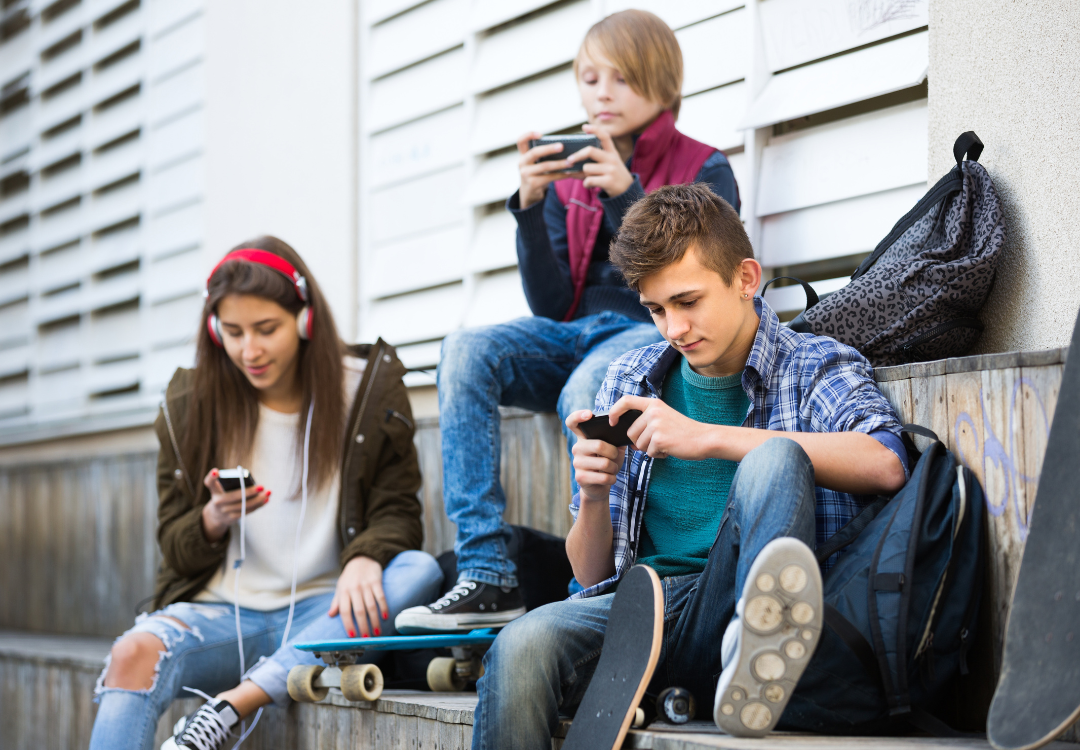
The answer is unlikely to be simply shouting “get off your phone”.
Parents need to stay connected enough that children can bring difficult material home without expecting immediate judgement or panic.
Try to keep one message clear:
If something happens online that scares, confuses or embarrasses you, you can bring it to me.
That open door matters.
Resilience doesn't mean forcing children through distress
We often hear that children need to become more resilient.
They do.
Life will involve disappointment, failure, anxiety, conflict and uncertainty.
But resilience is not built by throwing a child into situations their nervous system cannot manage and demanding that they cope.
It develops through supported struggle.
We create enough safety that the child can stretch beyond what feels comfortable without pushing them beyond what they can tolerate.
That distinction is particularly important with school avoidance.
Avoiding everything that makes us anxious can strengthen anxiety.
But repeatedly forcing a child into complete overwhelm is not the answer either.
The question becomes:
How can we make the next step manageable enough that my child can experience success?
What actually helps an anxious child at school?
Often the most effective changes are surprisingly simple.
Predictability
Knowing what is going to happen reduces uncertainty.
Visual timetables, clear routines and warning children before transitions can all help.
Clearer instructions
An overwhelmed child may struggle to process long explanations.
Breaking tasks into smaller pieces reduces cognitive load.
Movement
Some children regulate through movement.
Short movement breaks, outdoor time or simply being allowed to move between periods of concentrated work can make an enormous difference.
Reduced sensory load
Seating position, noise, lighting and busy environments can matter enormously for some children.
A calm adult
A dysregulated child cannot simply be reasoned back into calm.
Often they need to borrow regulation from the adult first.
A quieter voice.
Fewer words.
Less urgency.
Connection before correction.
A safe space
Some children benefit from knowing there is somewhere they can briefly reset before overwhelm turns into complete shutdown or explosion.
Individualised support
What calms one child may make another feel worse.
One child needs breathing.
Another needs movement.
Another needs space.
Another needs connection.
This is why good support begins with understanding the individual child rather than applying the same regulation strategy to everybody.
How parents and schools can work together
Perhaps one of the most important protective factors for a struggling child is a strong relationship between home and school.
Unfortunately, when things become difficult, the opposite often happens.
Parents feel blamed.
Teachers feel blamed.
Everybody becomes defensive.
And the child remains stuck in the middle.
If you need to raise concerns with school, begin by asking yourself:
What am I actually worried about?
What have I observed?
What outcome do I want from this conversation?
Who knows my child best within school?
Then approach the conversation with curiosity.
For example:
“We're noticing that she comes home completely exhausted and is becoming increasingly anxious on Sunday evenings. I appreciate you may be seeing something different at school. Could we compare what we're both observing and work out whether there are any small adjustments that might help?”
That is very different from:
“School is making my child anxious and nobody is doing anything about it.”
Even when you are frightened or angry, remembering the outcome you need can help move the conversation towards problem-solving.

If your child's support plan isn't working
A long plan is not necessarily a useful plan.
The most effective support tends to translate into small, specific adjustments adults can actually remember and use.
Where possible, plans should be created with the child and family, not simply for them.
What helps this child regulate?
What are their known triggers?
How do we recognise when they are becoming overwhelmed?
What should an adult do first?
Where do they go if they need help?
What small classroom adjustments make learning easier?
Consistency across the school day is often more useful than pages of recommendations nobody can realistically remember.
When school avoidance begins
School avoidance can develop gradually.
Your child becomes reluctant.
Then increasingly distressed.
Then mornings become battles.
Eventually school may feel impossible.
The earlier we become curious, the better.
Instead of asking only:
“Why won't you go to school?”
try breaking the experience down.
Is it:
The journey?
Separation?
A particular lesson?
A particular teacher?
Break time?
The dining hall?
Friendships?
Reading aloud?
PE?
Noise?
Being behind academically?
Fear of getting something wrong?
Not knowing the answer does not mean your child is being difficult.
They may genuinely not know.
But the more specific the picture becomes, the easier it is to identify a manageable next step.
Track what is actually happening
When families are living with school anxiety, everything can start to feel connected to everything else.
And that can become overwhelming.
This is exactly where tracking can help.
Look across:
School mornings
Sleep
Food
Physical symptoms
Particular lessons
Social situations
Sensory overload
Movement
Screen use
Emotional regulation
After-school behaviour
Recovery time
You may begin seeing patterns you simply could not see while firefighting from one difficult day to the next.
That is why we created School Struggles? Start Here! The Whole Child Guide, Tracker and Action Plan.
For £9.99, it gives you a structured way to step back and look at the bigger picture of what may be affecting your child.
Instead of trying to change everything at once, it helps you identify patterns and choose one informed, manageable next step.
GET THE £9.99 GUIDE, TRACKER AND ACTION PLAN
Your child needs you, even when they appear to be pushing you away
Teenagers can be confusing.
One moment they appear fiercely independent.
The next they need you as much as they did when they were six.
They may tell you to leave them alone and later wonder why you didn't realise they needed comfort.
That is development.
Parents remain an enormously important reference point.
Your child is watching:
How do you deal with stress?
How do you recover after making a mistake?
How do you speak about yourself?
How do you treat people?
How do you manage disagreement?
What do you value?
Our behaviour often teaches more powerfully than our lectures.
And when we do get it wrong, as every parent will, repair matters.
“I didn't handle that very well yesterday.”
“What did you need from me?”
“What could we do differently next time?”
We do not need perfect parenting.
We need connection strong enough to allow repair.
Focus on the journey, not just the outcome
When school becomes difficult, adults understandably become focused on outcomes.
Attendance.
Grades.
Homework.
Exams.
Getting through the school gates.
But children are developing human beings, not performance reports.
Praise the courage it took to try.
Notice the small improvement.
Recognise when they recovered from disappointment.
Celebrate asking for help.
Notice when they tried again.
Because when children become frightened of disappointing us, school pressure increases.
When they know they are valued independently of the outcome, struggle becomes safer.
Where do you start if your child is struggling?
Start with curiosity.
Not catastrophe.
Not blame.
Not ten new interventions.
Observe.
Listen.
Track.
Talk to school.
Look at your child across the whole child picture.
Ask what makes school easier and what makes it harder.
Make one manageable adjustment.
Then see what changes.
Our Back-to-School Resource Hub brings together practical support for school anxiety, school refusal, learning struggles, regulation, primitive reflexes, routines, movement and whole child health, helping you find the information most relevant to your child.
EXPLORE THE FREE BACK-TO-SCHOOL RESOURCE HUB
And if you are thinking:
“There is so much going on that I don't even know what I am looking for anymore,”
start with the £9.99 School Struggles? Start Here! Whole Child Guide, Tracker and Action Plan.
It was created to help you move from overwhelm to observation, from scattered symptoms to patterns, and from trying to fix everything to identifying one informed place to begin.
GET THE GUIDE, TRACKER AND ACTION PLAN >> FOR £9.99
Frequently Asked Questions
What are the signs of school anxiety in children?
Signs can include stomach aches, headaches, separation anxiety, difficulty sleeping, emotional outbursts, reluctance to attend school, perfectionism, irritability, withdrawal, concentration difficulties and becoming extremely tired after school.
Why is my child anxious about school?
There is rarely one universal cause. School anxiety can be connected with learning difficulties, friendships, sensory overwhelm, separation, academic pressure, neurodevelopmental needs, bullying, transitions, emotional regulation or feeling unable to meet the demands of the school environment.
Why does my child seem fine at school but have meltdowns at home?
Some children use significant emotional and physical energy to cope during the school day. They may suppress distress until they reach the safety of home, where accumulated fatigue and stress become visible.
What does anxiety look like in a teenager?
Teen anxiety may appear as worry, withdrawal, irritability, perfectionism, disrupted sleep, avoiding friends, school refusal, low confidence, negative self-talk or losing interest in activities they previously enjoyed.
How can I help my child with back-to-school anxiety?
Prepare gradually, create predictable routines, listen without immediately trying to fix everything, identify exactly which parts of school feel difficult, work collaboratively with school and focus on manageable steps rather than demanding that anxiety disappear immediately.
Does avoiding school make anxiety worse?
Avoidance can sometimes reinforce fear because the child never has an opportunity to learn that they can cope. However, repeatedly forcing a highly overwhelmed child beyond what they can tolerate may also be unhelpful. The aim is usually to understand what is driving the distress and support manageable steps back towards participation.
How should I talk to school if my child is struggling?
Begin with observations rather than blame. Explain what you are seeing at home, ask what school is observing and agree on a small number of practical adjustments or next steps. Approaching the conversation as a partnership usually creates more opportunity for problem-solving.
How can schools support anxious children?
Helpful approaches may include predictable routines, clear instructions, movement breaks, reduced sensory load, trusted adults, safe spaces, co-regulation and individualised strategies based on what helps that particular child.
When should I seek help for my child's anxiety?
Seek professional support when changes are significant, persistent, affect several areas of your child's life or substantially interfere with school, sleep, relationships or everyday functioning. Talk of self-harm, hopelessness or marked personality change should always be taken seriously.
This article is for educational purposes only and does not diagnose or replace individual medical, psychological, educational or therapeutic advice.


