FREE MASTERCLASS - Discover the real reasons behind your child’s struggles and what to do next.

BLOG
Forever Chemicals and Children | What Parents Need to Know
Forever Chemicals Are Everywhere.
Panorama Exposed It
- Here’s What You Can Do Next.
If you watched the BBC’s Panorama: The Truth About Forever Chemicals this week, you may still feel that lingering mix of dread, disbelief, and the quiet calculation of what in your home might now be exposing your family to toxic load.

Because here’s the unfiltered truth the programme only brushed against:
PFAS aren’t “forever chemicals.”
They’re everywhere chemicals.
And our children’s bodies were never designed for this world.
Let’s talk about what the documentary showed… and what else the science now tells us.
What PFAS Are — And Why It Matters, Especially for Our Kids
Per- and polyfluoroalkyl substances (PFAS) are a large family of synthetic chemicals used since the 1950s in many consumer and industrial products because they repel oil, grease, water — and resist heat.
NIEHS
https://www.niehs.nih.gov/health/topics/agents/pfc/index.cfm
Environmental Protection Agency
https://www.epa.gov/pfas/our-current-understanding-human-health-and-environmental-risks-pfas
That makes them useful for:
non-stick cookware
waterproof / stain-resistant clothing and outdoor wear
stain-resistant furniture or carpets
food packaging and greaseproof wrappers
firefighting foam (industrial)
many everyday items, including some cosmetics and food-contact materials.
CHEM Trust
https://chemtrust.org/wp-content/uploads/PFAS_Brief_CHEMTrust_2019.pdf
NRDC
https://www.nrdc.org/stories/forever-chemicals-called-pfas-show-your-food-clothes-and-home
But here’s the problem:
PFAS are extremely persistent in the environment — they break down slowly (if at all), and they bioaccumulate in the body over time.
NIEHS
https://www.niehs.nih.gov/health/topics/agents/pfc/index.cfm
PubMed
https://pubmed.ncbi.nlm.nih.gov/
Recent 2025 research from University of Rochester Medical Centre shows that even low-level PFAS exposure during pregnancy can alter infants’ immune systems, potentially reducing their ability to respond to vaccines, and increasing risk of recurrent infections.
University of Rochester Medical Centre
https://www.urmc.rochester.edu/news/publications/health-matters/pfas-what-you-need-to-know
A 2024-25 study from University of Aberdeen (and collaborators) now suggests PFAS exposure in utero may affect metabolic development, and may raise risks of metabolic disease later in life.
University of Aberdeen
https://www.abdn.ac.uk/news/22672/
Because children drink more water, eat more food and breathe more air per kilo than adults, and often crawl or play close to dust or treated fabrics — their overall PFAS exposure tends to be higher proportionally.
Environmental Protection Agency
https://www.epa.gov/pfas/our-current-understanding-human-health-and-environmental-risks-pfas
If your child has sensory issues, neurodivergence, immune or gut vulnerability, or seems to struggle with sleep, mood or behaviour — PFAS may not be the only load. But they’re a heavy brick in a wall that should never have been built.
Where PFAS Hide — And What Household Habits Up the Load
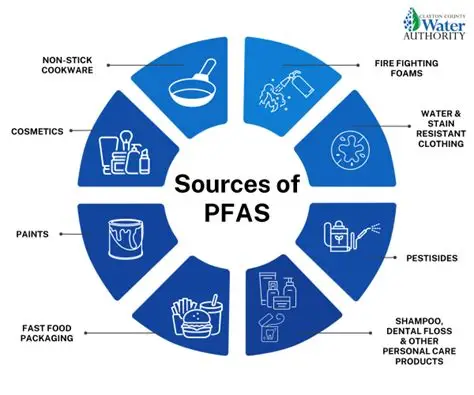
Here are the most common “everyday” sources of PFAS exposure in a typical family home — many of them captured (implicitly or explicitly) in Panorama:
Non-stick cookware (especially older, scratched pans)
Environmental Protection Agency
https://www.epa.gov/system/files/documents/2024-04/water-filter-fact-sheet.pdf
NRDC
https://www.nrdc.org/stories/forever-chemicals-called-pfas-show-your-food-clothes-and-home
Tap water — PFAS can contaminate municipal or well water.
https://www.epa.gov/cleanups/reducing-pfas-your-drinking-water-home-filter
European Environment Agency
https://www.eea.europa.eu/publications/pfas-forever-chemicals-an-emerging
Food packaging & grease-resistant wrappers
(takeaways, pizza boxes, microwave popcorn bags, bakery wrappers etc.)
NRDC
https://www.nrdc.org/stories/forever-chemicals-called-pfas-show-your-food-clothes-and-home
NCBI
https://www.ncbi.nlm.nih.gov/books/NBK584691/
Waterproof or stain-resistant clothing, coats, school uniforms, outdoor gear, carpets & furniture
Which?
CHEM Trust
https://chemtrust.org/wp-content/uploads/PFAS_Brief_CHEMTrust_2019.pdf
Household dust & textiles
https://www.epa.gov/pfas/our-current-understanding-human-health-and-environmental-risks-pfas
NCBI
https://www.ncbi.nlm.nih.gov/pmc/articles/PMC7082621/
Cosmetics or personal care products containing “fluoro-” or PTFE ingredients
The Guardian
LeafScore
Food sources (especially seafood, produce grown with contaminated water)
NCBI
https://www.ncbi.nlm.nih.gov/books/NBK584691/
CHEM Trust
https://chemtrust.org/wp-content/uploads/PFAS_Brief_CHEMTrust_2019.pdf
That means, for most families: PFAS exposure isn’t occasional. It’s ongoing. From morning to night.
What You Can Do
- The Realistic, Non-Panic Plan for Mums in 2025
You can’t make PFAS disappear.
But you can lighten the load — gently, realistically, without blowing up your life.
✅ Kitchen & Water
Ditch older or flaking non-stick pans — replace over time with ceramic, stainless steel, cast-iron or glass cookware.
NRDC
https://www.nrdc.org/stories/forever-chemicals-called-pfas-show-your-food-clothes-and-home
Johns Hopkins Public Health
Use a water filter certified to reduce PFAS (for drinking and cooking water).
The Guardian
PFAS
Minimise takeaway and packaged foods in greaseproof / PFAS-coated containers.
NRDC
https://www.nrdc.org/stories/forever-chemicals-called-pfas-show-your-food-clothes-and-home
NCBI
https://www.ncbi.nlm.nih.gov/books/NBK584691/
Home & Textiles
Vacuum and damp-dust regularly — PFAS settle in dust.
NCBI
https://www.ncbi.nlm.nih.gov/pmc/articles/PMC7082621/
Choose PFAS/PFC-free clothing, school uniforms and outerwear where possible.
Which?
CHEM Trust
Avoid “stain-proof,” “water-resistant,” and “easy-clean” furnishings.
LeafScore
The Guardian
Body & Personal Products
Check ingredient labels — avoid “fluoro-” or “PTFE.”
NRDC
Consider simpler makeup and fewer synthetic fragrances.
Nourish, Detox & Support Body Resilience
Whole-food meals high in fibre support toxin binding and elimination.
NCBI
https://www.ncbi.nlm.nih.gov/books/NBK584691/
PubMed
https://pubmed.ncbi.nlm.nih.gov/
Hydration, sleep, fresh air, movement — these support detox pathways and nervous system regulation.
Why I’m Writing This
- Because PFAS Is One Part of the Bigger Picture
PFAS are not the whole story — they’re one brick in a wall made of birth trauma, infections, mould, stress, processed foods, sleep loss, screens, environmental toxins and more.
PFAS make the wall higher — but not unmovable.
The body can recover when we lighten the overall load and support the nervous system first.
Fancy a Podcast on this? I’ve Got You Covered
I spoke with functional medicine practitioner and homotoxicologist Dr Lauren Lee Stone (mum to two boys with neuro-immune challenges) in a podcast episode that has helped hundreds of parents feel informed and hopeful.
Search My Mighty Quinn and look for:
“Toxic Overload in Kids: Why They Can’t Sleep, Calm Down or Heal — And What You Can Do About It.”
Listen on Apple Podcasts
Listen on Spotify
Final Word — From One Mum to Another
You didn’t choose this chemical landscape.
But now that it’s visible, you can begin to make gentle, empowered changes.
One pan. One coat. One filter. One meal.
That’s enough for today.
With solidarity, science and big hugs,
Lucia x
Stop chasing symptoms.
Start healing the root cause.

FREE MASTERCLASS
"From Burnout to Breakthrough"
Your child doesn’t need more labels.
You need more answers.
Discover the real reasons behind your child’s struggles - and why your nervous system holds the key to your child’s ability to heal.
Need More Support?
If you're feeling overwhelmed and just need to be heard and supported to work out the best next step, then book a 1:1 Parent Support session with Lucia.