Worried About Your Child? Start Here.
Anxiety, attention, behaviour or learning difficulties? Feeling overwhelmed and unsure where to turn? You're not alone. Discover a clearer way forward.

ADHD, AUTISM, ANXIETY AND CHILD DEVELOPMENT — EXPLAINED
Practical articles to help you understand your child’s behaviour and health.
STOP MANAGING SYMPTOMS.
START UNDERSTANDING YOUR CHILD.
Explore the Root Causes behind Attention, Behaviour and Learning Challenges.
Parent-Led. Science-Backed. Drug-Free.
BLOG
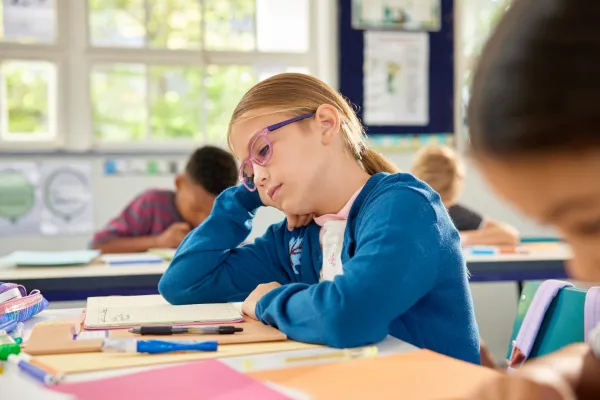
Why Is My Child Struggling at School? The Hidden Foundations of School Readiness
Child Struggling at School? What School Readiness Really Means
A new school year is supposed to feel like a fresh start.
New shoes. New pencil case. Uniform ready. Backpack packed.
But for many families, back to school brings something very different: anxiety, tears, exhaustion, battles at the front door, phone calls from school, difficulties concentrating, poor handwriting, sensory overwhelm, meltdowns or a child who appears to hold everything together until they get home and completely falls apart.
And when a child is struggling at school, the conversation often turns very quickly to behaviour.
Why won't they sit still?
Why aren't they listening?
Why are they avoiding their work?
Why are they so emotional?
Why can't they just try a little harder?
But perhaps there is another question we need to ask first:
Is this child actually ready, physically and neurologically, for everything the school day is asking of them?
Because school readiness is about far more than knowing letters, numbers, colours or how to put on a coat.
It is about whether the brain and body have developed the foundations needed to sit, listen, look, write, read, coordinate, regulate, concentrate and learn.
And for some children, what looks like a behavioural problem may actually be a clue that one or more of those foundations is still working much harder than we realise.
SCHOOL STRUGGLES? START HERE! >> GUIDE, TRACKER AND ACTION PLAN

What does “school readiness” actually mean?
We tend to think about school readiness academically.
Can my child recognise their name?
Can they count?
Can they follow instructions?
Are they emotionally ready to leave me?
All of those things matter. But there is another layer that receives far less attention: physical and neuromotor readiness for learning.
A child's developing brain does not operate separately from their body.
Balance, posture, coordination, body awareness, eye movements and the ability to control movement all form part of the physical platform upon which higher skills such as reading, writing and sustained attention are built.
Think of a tree.
We notice the leaves and branches because they are above ground. In school, those visible outcomes are reading, handwriting, concentration, behaviour and academic performance.
But a tree cannot flourish without a stable trunk and strong roots.
Our children need those foundations too.
Learning is a physical task as well as a cognitive one
Think for a moment about everything a child is required to do during one ordinary classroom lesson.
They may need to sit upright, keep their body relatively still, listen to a teacher while filtering out background noise, look at the board, move their eyes back to a page, remember an instruction, hold a pencil, coordinate their hand and eyes, write across the page, read a line of text, ignore movement around them and maintain attention.
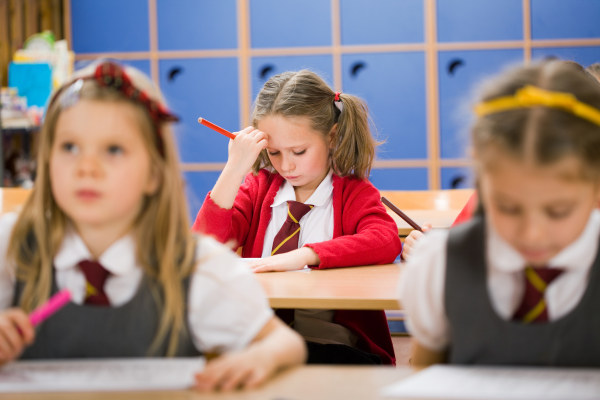
Most adults barely notice how physically complex this is.
When those underlying skills have become automatic, the brain is free to concentrate on the lesson itself.
But what happens when they are not automatic?
A child may have to devote far more conscious effort simply to control their body, maintain posture, coordinate their eyes or manage the sensory environment.
That leaves fewer resources available for learning.
The child may be perfectly intelligent and capable, yet appear distracted, slow, restless or unwilling.
The issue may not be potential.
It may be access to that potential.
When behaviour is really information
One of the most important shifts we can make as parents and educators is to stop seeing behaviour only as something to correct and start asking what it might be communicating.
A child who constantly moves may be trying to meet a physical or sensory need.
A child who lies across their desk may find sitting upright genuinely difficult.
A child who avoids writing may be working extraordinarily hard to coordinate the physical mechanics of handwriting.
A child who seems unable to listen may already be overwhelmed by competing sensory information.
A child who melts down after school may simply have reached the end of their available capacity.
Behaviour does not tell us the answer.
But it can give us a clue about where to start looking.
Some signs worth becoming curious about include:
Constant fidgeting, wriggling, rocking or difficulty remaining seated
Slumping, leaning or almost lying across the desk to write
Awkward pencil grip, slow handwriting or avoiding written work
A large gap between what your child can explain verbally and what they can produce on paper
Difficulty copying between the board and their workbook
Losing their place when reading or avoiding reading altogether
Poor balance, coordination or ball skills
Difficulty crossing the body's midline during physical tasks
Sensitivity to noise, touch, clothing, crowds or the classroom environment
Concentration that deteriorates rapidly as the day progresses
School anxiety, avoidance or refusal
Extreme tiredness, irritability or emotional collapse after school
None of these signs proves that a child has a particular developmental difficulty.
They are an invitation to look beneath the behaviour rather than stopping at the behaviour.
Primitive reflexes: an overlooked part of the picture
One area of development increasingly discussed in relation to school readiness is primitive reflexes.
Primitive reflexes are automatic movement responses present in early infancy. They help a new-born respond to and survive their early environment.
As the brain develops and higher centres increasingly take control, these early reflex patterns should gradually become inhibited and be replaced by more mature postural responses and voluntary movement.
Sometimes elements of these early patterns can remain active beyond the stage at which they would normally be expected to have settled.
This is sometimes referred to as retained primitive reflexes or neuromotor immaturity.
Primitive reflexes should not be treated as a diagnosis or assumed to explain every learning or behavioural difficulty. They can, however, act as developmental signposts that suggest the underlying motor system may deserve closer assessment.
Research into neuromotor readiness has found associations between persistent primitive reflexes and difficulties involving educational achievement, movement and classroom functioning.
And when you understand how some of these reflexes work mechanically, certain school struggles begin to look very different.
Could primitive reflexes affect handwriting and sitting still?
Take the Asymmetrical Tonic Neck Reflex, or ATNR.
In infancy, turning the head to one side is associated with characteristic movements of the arms and legs. This early reflex plays a role during the first stages of motor and visual development.
If elements of that pattern remain active later, turning the head while writing can potentially make the mechanics of hand control more difficult.
The child may compensate by gripping the pencil tightly, rotating their paper, adopting an unusual posture or avoiding crossing the middle of the page comfortably.
Suddenly, the child who “hates writing” looks rather different.
They may know exactly what they want to say.
The physical process of getting it onto paper may simply be taking far more effort than anybody can see.
Another reflex, the Symmetrical Tonic Neck Reflex, or STNR, links movements of the head with changes in the upper and lower body.
If that pattern remains immature, looking down at a desk can make maintaining a comfortable seated posture more difficult.
The result can be slumping, leaning, moving around, sitting on the feet or struggling to remain still.
Again, that does not automatically mean a retained reflex is the cause. Assessment matters.
But it does demonstrate why simply telling a child to “sit properly and concentrate” may completely miss what is happening underneath.
Why your bright child may produce very little written work
This is one of the most heart-breaking patterns for parents and teachers.
You know your child is bright.
They can talk about a subject beautifully. Their vocabulary is extraordinary. They understand complex ideas.
Then you look at their written work and see two sentences.
It is tempting to conclude that they are lazy, rushing or refusing to apply themselves.
But writing is an extraordinarily sophisticated neurological and physical task.
The child has to generate an idea, organise language, hold that thought in working memory, control posture, coordinate their eyes, position the page, control the pencil and produce a sequence of precise movements.
If several of those processes require conscious effort instead of happening automatically, the demand becomes enormous.
Eventually, avoidance makes sense.
Movement matters for the developing brain
Children were born to move.
Movement is not simply a break from learning. Movement is part of how the developing nervous system learns.
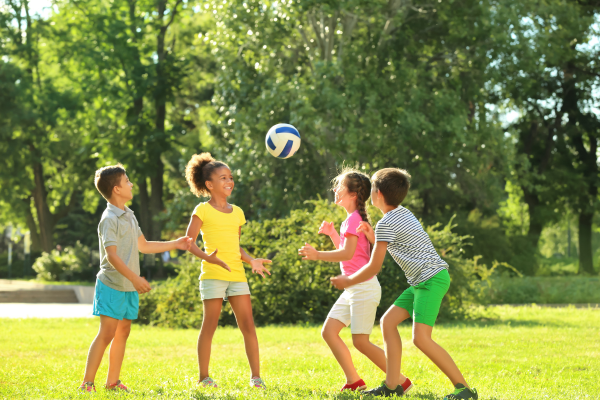
Through crawling, climbing, running, balancing, rolling, throwing, catching, spinning, exploring and playing, children receive huge amounts of sensory and motor information.
They learn where their body is in space.
Their balance systems are challenged.
Their eyes learn to work together with movement.
They develop coordination.
They encounter risk, adjust, fail, try again and build physical confidence.
Yet modern childhood can make those opportunities harder to come by.
More time is spent sitting. More journeys happen in cars. More entertainment takes place on screens. More interaction is mediated through devices.
Screens themselves are not the sole explanation for children's difficulties, and this is not about blaming parents for using them. Sometimes a screen is exactly what allows an exhausted parent to cook dinner or take a phone call.
The more useful question is whether screens are displacing something the developing child also needs.
Movement.
Outdoor play.
Physical exploration.
Face-to-face interaction.
Conversation.
Human beings respond to one another moment by moment. We notice facial expressions, pauses, tone of voice, body language and emotion. We wait, respond and adapt.
That reciprocal communication provides something very different from even the most stimulating piece of digital content.
Perhaps your child isn't “bad at school”. Perhaps school is hard for their system.
This distinction matters enormously.
Imagine spending six hours every day in an environment in which maintaining your posture is tiring, writing is laborious, the lights are overwhelming, other people's voices compete for your attention and your body is constantly asking you to move.
Then imagine being repeatedly told to concentrate harder.
For some children, this can be what school feels like.
By the time they come through the front door, there may simply be nothing left.
This is why the child who “behaves perfectly” at school can collapse at home.
Why mornings become increasingly difficult.
Why Sunday evening anxiety begins.
Why seemingly tiny demands produce enormous reactions.
And why school refusal or school anxiety deserves curiosity rather than judgement.
The most helpful question may no longer be:
“How do we stop this behaviour?”
It becomes:
“What is making this so difficult for my child?”
What can parents do if their child is struggling at school?
Start by observing before trying to fix
Look for patterns across the whole day.
When is your child at their best?
When does their concentration disappear?
What happens before a difficult morning?
Which lessons are hardest?
Is handwriting worse than verbal work?
Does noise change their behaviour?
Do they need to move after sitting?
How long does it take them to recover after school?
Patterns give you far more useful information than one difficult day.
This is exactly why we created School Struggles? Start Here! The Whole-Child Guide, Tracker and Action Plan.
For £9.99, it helps you step away from the overwhelm and begin mapping what is actually happening across your child's mornings, school day, after-school recovery and sleep.
You will track patterns, explore the different systems that may be contributing to your child's struggles and choose one informed, manageable first change, rather than trying ten things at once.
SCHOOL STRUGGLES? START HERE! >> TRACKER AND ACTION PLAN FOR £9.99
Give movement a proper place in the day
This does not have to mean another organised activity.
Walking, cycling, climbing, throwing a ball, balancing, playgrounds, rough-and-tumble play, swimming, gardening and simply being outdoors all provide forms of physical experience.
For younger children especially, free movement and play should not be treated as wasted time.
They are part of development.
Watch how your child uses their body
Instead of immediately correcting poor posture or fidgeting, observe it.
What happens when they look down?
Do they wrap their legs around the chair?
Do they turn their page sharply to write?
Do they grip their pencil excessively hard?
Can they balance easily?
Do they find catching or throwing unusually difficult?
Does their body seem to be working harder than everybody else's?
You are not trying to diagnose your child from these observations. You are gathering information that may help you ask better questions.
Talk to school about capacity, not simply compliance
The conversation with school can change dramatically when we move from:
“They won't sit still.”
to:
“We've noticed that sitting for prolonged periods seems physically difficult. Can we observe when it becomes worse and what helps?”
Or from:
“They refuse writing.”
to:
“They can explain the answer verbally but struggle to get the same amount onto paper. Could we look more closely at the physical and visual demands of handwriting?”
Specific observations make it easier for parents and teachers to work together.
Seek appropriate assessment when concerns persist
Developmental factors are only one possible piece of the picture.
If you have concerns about your child's coordination, development, attention, sensory processing, vision, hearing, learning or health, appropriate professional assessment matters.
Start with your GP, school or relevant mainstream services where appropriate.
Depending on your child's presentation, additional assessment from suitably qualified occupational therapists, physiotherapists, neurodevelopmental practitioners, functional vision specialists or other relevant professionals may also be useful.
The important principle is simple:
Do not assume. Assess.
And keep asking questions until the picture makes sense.
School readiness is whole child readiness
Perhaps this is the biggest shift of all.
We have become very focused on what children can produce.
Can they read?
Can they write?
Can they sit still?
Can they get good grades?
Can they behave appropriately?
But before asking a developing child for higher-level performance, we need to ask whether the foundations beneath that performance are secure.
Because a child's educational outcomes do not begin with the worksheet sitting on the desk.
They begin much earlier, with movement, physical development, sensory experience, connection, safety, play and the gradual organisation of the developing nervous system.
When we understand this, behaviour becomes less frightening.
It becomes information.
And information gives us somewhere to start.
You do not need to solve everything before September
If your child is already struggling, back to school can make you feel as though you need an entire treatment plan, a new school strategy and ten different specialists before term begins.
You don't.
Start by becoming curious.
Observe.
Look for patterns.
Ask what may be happening beneath what you can see.
Then make one informed change.
Our Back-to-School Resource Hub brings together practical support for school struggles, anxiety, refusal, primitive reflexes, routines, regulation and whole-child health, so you can explore the areas most relevant to your family without piecing everything together alone.
EXPLORE THE FREE BACK-TO-SCHOOL RESOURCE HUB
And if you are thinking, “I know my child is struggling, but I have absolutely no idea where to begin”, start with the £9.99 School Struggles: Start Here, Whole-Child Guide, Tracker and Action Plan.
You do not need another label for everything your child is doing.
You need a clearer picture of why it may be happening.
GET THE GUIDE, TRACKER AND ACTION PLAN >> FOR £9.99
Frequently Asked Questions
What does school readiness mean?
School readiness is more than early academic knowledge. It includes the physical, developmental, emotional, sensory and cognitive capacities that allow a child to meet the demands of the classroom, including sitting, listening, coordinating movement, reading, writing, concentrating and regulating emotions.
Why does my child struggle to sit still at school?
There are many possible reasons, including age, attention, sensory needs, stress, fatigue, the classroom environment and physical or neuromotor development. Persistent difficulty sitting comfortably is worth observing rather than automatically treating as deliberate misbehaviour.
Can retained primitive reflexes cause learning difficulties?
Persistent primitive reflexes have been associated with neuromotor immaturity and with some learning, motor and behavioural difficulties. They do not explain every child's struggles and should not be used as a stand-alone diagnosis. A qualified assessment is important when concerns are significant.
Can primitive reflexes affect handwriting?
Some primitive reflex patterns involve relationships between head movement, arm movement and posture. If elements of these patterns remain active, handwriting and desk work may require greater physical effort for some children. Other causes of handwriting difficulty also need to be considered.
Why does my child behave well at school but melt down at home?
Some children use enormous effort to manage academic, social, physical and sensory demands during the school day. Once they return to a safe environment, accumulated fatigue and stress can become visible. Looking at the child's total school-day load can be more useful than viewing the after-school behaviour in isolation.
Does movement help children learn?
Movement provides sensory and motor experiences that contribute to balance, coordination, body awareness and physical development. Regular opportunities for active play and movement are an important part of healthy childhood development.
What should I do if my child is anxious or refusing school?
Persistent school anxiety or school refusal deserves careful investigation. Look at when and how the difficulty occurs, what demands increase it, what helps your child recover and whether there are learning, sensory, developmental, social, emotional or health factors contributing. Seek appropriate professional support where needed.
This article is for educational purposes only and does not diagnose or replace individual medical, psychological, educational or therapeutic advice.
Stop chasing symptoms.
Start healing the root cause.

FREE MASTERCLASS
"From Burnout to Breakthrough"
Your child doesn’t need more labels.
You need more answers.
Discover the real reasons behind your child’s struggles - and why your nervous system holds the key to your child’s ability to heal.
Need More Support?
If you're feeling overwhelmed and just need to be heard and supported to work out the best next step, then book a 1:1 Parent Support session with Lucia.
© Copyright 2026 The Brain Health Movement